
How to Pick a location for your business
Choosing a business location is one of the most strategic decisions you’ll make, as it directly impacts visibility, costs, customer access, and growth potential. The right location can lower expenses, attract customers, and support future expansion, while the wrong one can limit opportunities and increase risks.
Key factors to weigh include accessibility for customers, infrastructure, operating costs, proximity to suppliers, regulations, labor availability, safety, and room for growth. In short, your location isn’t just an address, it’s a critical part of your business strategy.
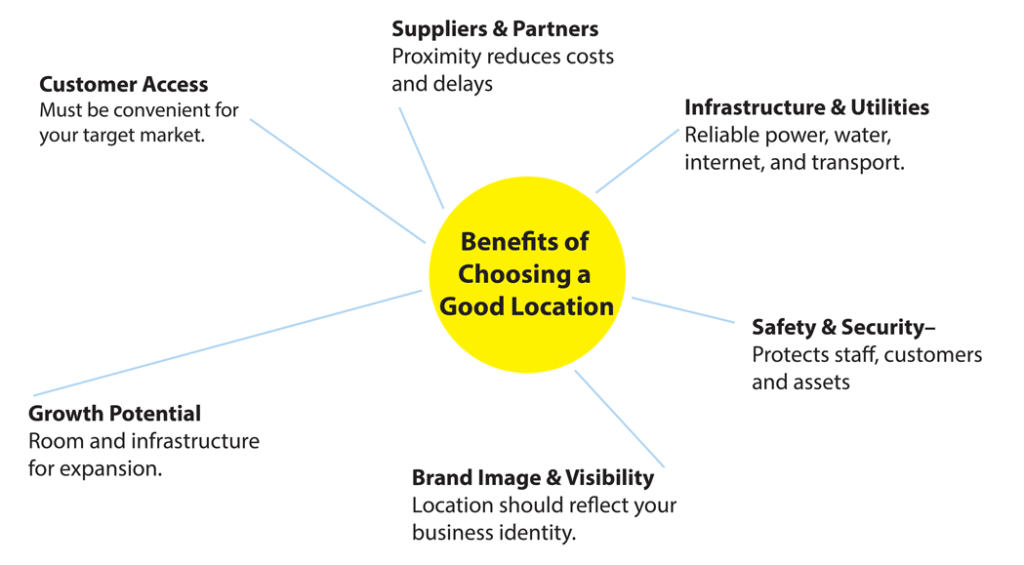
Benefits of Choosing a Good Location
1. Higher Customer Foot traffic
A well-placed business naturally attracts more walk-ins and repeat customers.
2. Stronger brand image
Being in a reputable or central area boosts credibility and brand perception.
3. Competitive Advantage
A prime spot helps you stand out from competitors and capture more market share.
4. Better Talent Attraction
Accessible and safe locations make it easier to hire and retain skilled employees.
5. Reduced Logistics & Efficiency
Reduced delivery times, smoother supply chains, and lower transport costs.
6. Long-term Stability
A strong location supports sustainable growth, reduces the need to relocate, and increases chances of business success.
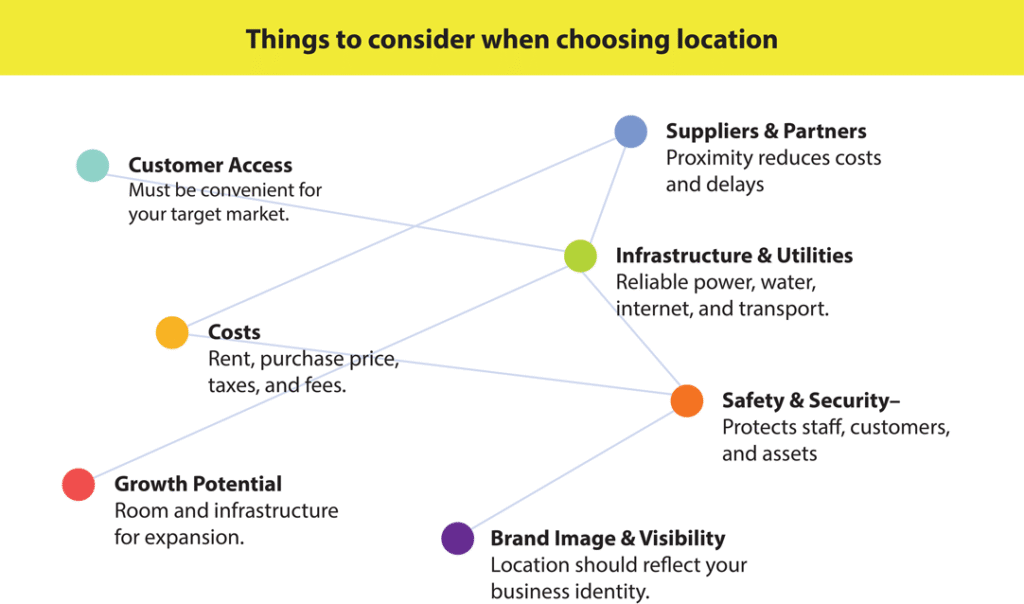
1. Customer Access
Description: This refers to how easily customers can reach your business, whether by foot, car, or public transport.
Why is it important?
- Determines foot traffic and sales volume.
- Improves customer convenience and loyalty.
- Increases competitive advantage.
Example of what happens when done right:
A pharmacy opens near a hospital and bus stop, attracting both patients and daily commuters.
Example of what happens if it is done wrong:
A boutique sets up in a remote area with poor transport links, discouraging customers from visiting.
2. Suppliers and Partners
Description:
Proximity and access to reliable suppliers and partners who support your operations.
Why is it important?
- Ensures timely delivery of materials.
- Reduces transportation costs.
- Strengthens business relationships.
Example of what happens when done right:
A restaurant chooses a location near local farms, guaranteeing fresh produce at lower delivery costs.
Example of what happens if it is done wrong:
A construction company sets up far from material suppliers, causing delays and higher logistics expenses.
3. Infrastructure & Utilities
Description:
The availability of roads, electricity, water, internet, and other essential facilities.
Why is it important?
- Supports smooth daily operations.
- Prevents interruptions and downtime.
- Enables scalability with modern systems.
Example of what happens when done right:
A tech startup rents office space with high-speed internet and reliable power backup, ensuring productivity.
Example of what happens if it is done wrong:
A manufacturing plant sets up in an area with frequent power cuts, halting production and frustrating customers.
4. Infrastructure & Utilities
Description:
Covers expenses such as rent, utilities, maintenance, and taxes linked to the location.
Why is it important?
- Directly affects profitability.
- Influences long-term sustainability.
- Helps maintain competitive pricing.
Example of what happens when done right:
A clothing store balances visibility and affordability by opening in a mid-range mall, keeping rent manageable while attracting customers.
Example of what happens if it is done wrong:
A small business leases a prime office in Lusaka’s CBD with rent exceeding its budget, leading to financial strain.
5. Infrastructure & Utilities
Description:
The level of protection from crime, theft, and hazards in and around the business location.
Why is it important?
- Protects employees, customers, and assets.
- Reduces insurance costs.
- Builds trust with clients.
Example of what happens when done right:
A jewelry shop opens in a secure shopping complex with 24/7 guards and surveillance, reassuring customers.
Example of what happens if it is done wrong:
A retail store operates in a high-crime neighborhood without security, resulting in frequent theft and loss of customers.
6. Growth Potential
Description:
The ability of the location to support future expansion or scaling.
Why is it important?
- Prepares the business for increased demand.
- Prevents costly relocations.
- Attracts investors looking for scalability.
Example of what happens when done right:
A logistics company selects a large plot near a highway with space for additional warehouses as business grows.
Example of what happens if it is done wrong:
A restaurant picks a cramped space that can’t accommodate more seating, limiting its ability to serve a growing customer base.
7. Brand Image & Visibility
Description:
How the location shapes public perception of your business and its exposure to potential customers.
Why is it important?
- Builds credibility and reputation.
- Increases spontaneous customer visits.
- Supports marketing and branding efforts.
Example of what happens when done right:
A high-end boutique opens in Lusaka’s premium mall, reinforcing its luxury image and attracting affluent shoppers.
Example of what happens if it is done wrong:
A corporate consulting firm sets up in a rundown area, undermining its professional reputation and losing client trust.